
2D Molecular Structure
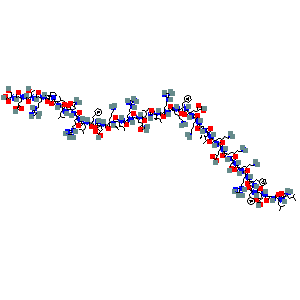
- CID
- 16198951
- Standard InChIKey
- POIUWJQBRNEFGX-XAMSXPGMSA-N
- FDA UNII
- 3DD771JO2H
- Residue Count
- 37 AA
- Structural Modifications
- Free N-terminus
- Free C-terminal acid
- No disulfide bonds (no Cys)
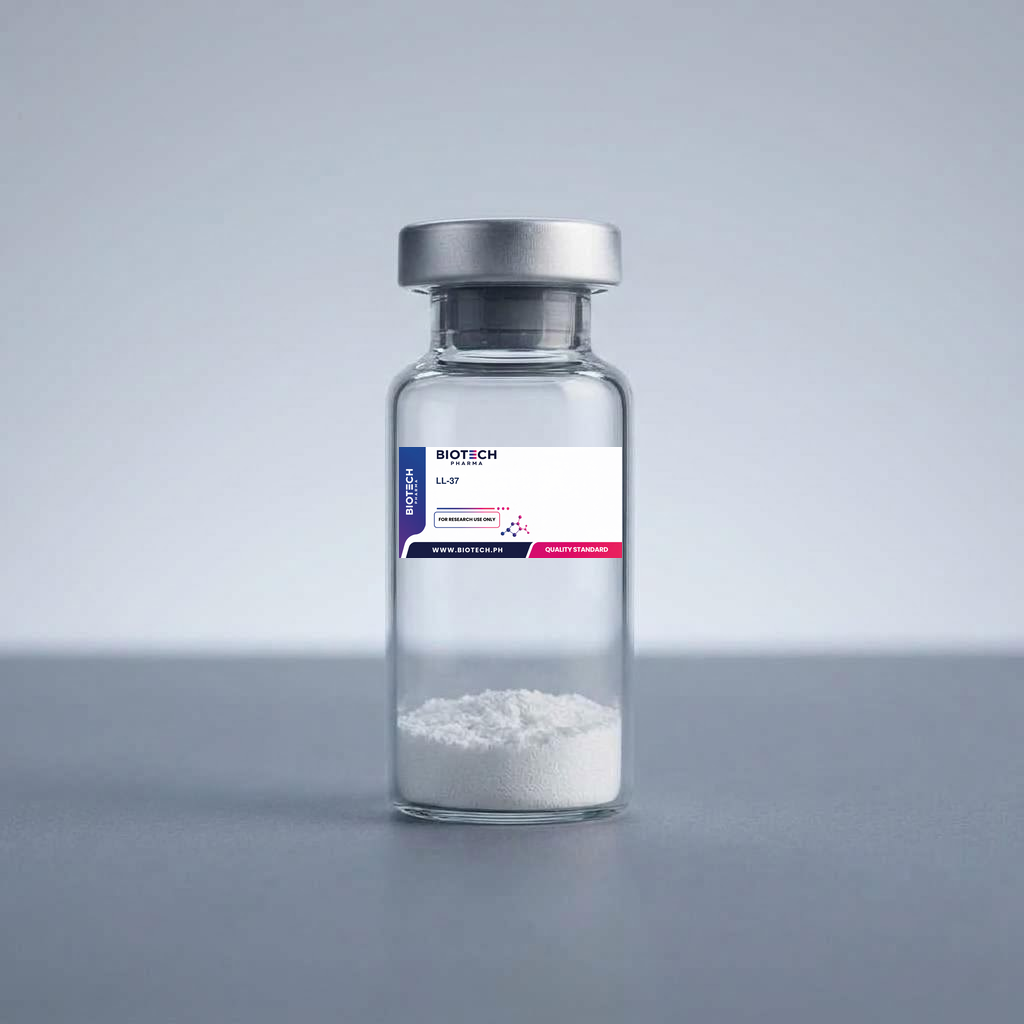
LL-37
Also known as: Cathelicidin antimicrobial peptide, CAP-18 fragment, CAMP(134-170)
- CAS Number
- 154947-66-7
- Molecular Formula
- C205H340N60O53
- Molecular Weight
- ≈ 4493 g/mol
- Purity
- Batch-specific
- Form
- Lyophilized powder
- Enquiry Sizes
- Research vial • Bulk / custom fill (quote required)
- Peptide Sequence37 residues
- LLGDFFRKSKEKIGKEFKRIVQRIKDFLRNLVPRTES
Compliance Notice: All products supplied by BioTech Pharma are intended strictly for laboratory research and development use only. They are not intended for human or veterinary use, diagnosis, treatment, or consumption of any kind. By submitting an enquiry, the requester confirms they are a qualified researcher or institution and accepts full responsibility for compliant handling and use.
Configure Your Request
Documentation requests are reviewed against the records available for the applicable lot. Availability, methods, and values must be confirmed for the specific enquiry and are not promised in advance.
Form supplied: Lyophilized powder. Your selections are carried into the quote request automatically.
Overview
LL-37 is the mature, C-terminal 37-residue peptide (sequence LLGDFFRKSKEKIGKEFKRIVQRIKDFLRNLVPRTES) released from human cathelicidin antimicrobial protein (hCAP-18, gene CAMP). Named for its two leading leucine residues and length, it is the only cathelicidin peptide in humans and adopts an amphipathic α-helix under membrane-mimetic conditions.
In the published literature it is one of the most extensively characterized host-defense peptides, used as a reference material in assays of activity against bacteria and biofilms and in studies of chemotaxis and formyl-peptide-receptor interactions. These are model observations from basic research; they do not establish clinical efficacy and are not approved therapeutic uses.
BioTech Pharma supplies synthetic LL-37 as a lyophilized powder for laboratory research use only; it is not a drug and is not intended for human or veterinary use. The peptide is cationic and surface-active, so diluent choice affects handling. Lot-specific analytical documentation may be available and should be confirmed for the applicable material.
Research Applications
- Antibacterial and antibiofilm reference-material assays (in vitro)
- Innate-immunity and host-defense peptide research
- Formyl-peptide-receptor and chemotaxis studies
- Membrane-interaction and helical-structure work
- Immunomodulation and cell-model research
Frequently Asked Questions
Scientific References
Analytical Data
Lot-specific documentation may be available for the applicable material and must be confirmed per enquiry. Where available, it may include:
- HPLC purity result
- LC-MS identity confirmation
- Appearance
- Net content
Request the records you need with your quote and we will confirm availability for your batch.
Procurement Details
Availability, lead time, salt / content basis, and cold-chain requirements depend on the specific lot and quantity, so we confirm them per enquiry rather than publishing fixed figures. Request confirmation for your requirements with your quote and our team will respond with details for the applicable batch.
Storage & Handling
Lyophilized powder: store desiccated at −20 °C, protected from light and moisture. Reconstitute immediately before use; keep prepared aqueous solutions cold (2–8 °C) and use within an empirically determined stability window for the applicable material.
Related Compounds
BPC-157
Pentadecapeptide derived from gastric Body Protection Compound, widely studied in tissue-repair and gastrointestinal research models.
TB-500
N-acetylated heptapeptide corresponding to the thymosin β4 (17-23) actin-binding region, the identity registered for the research code "TB-500."
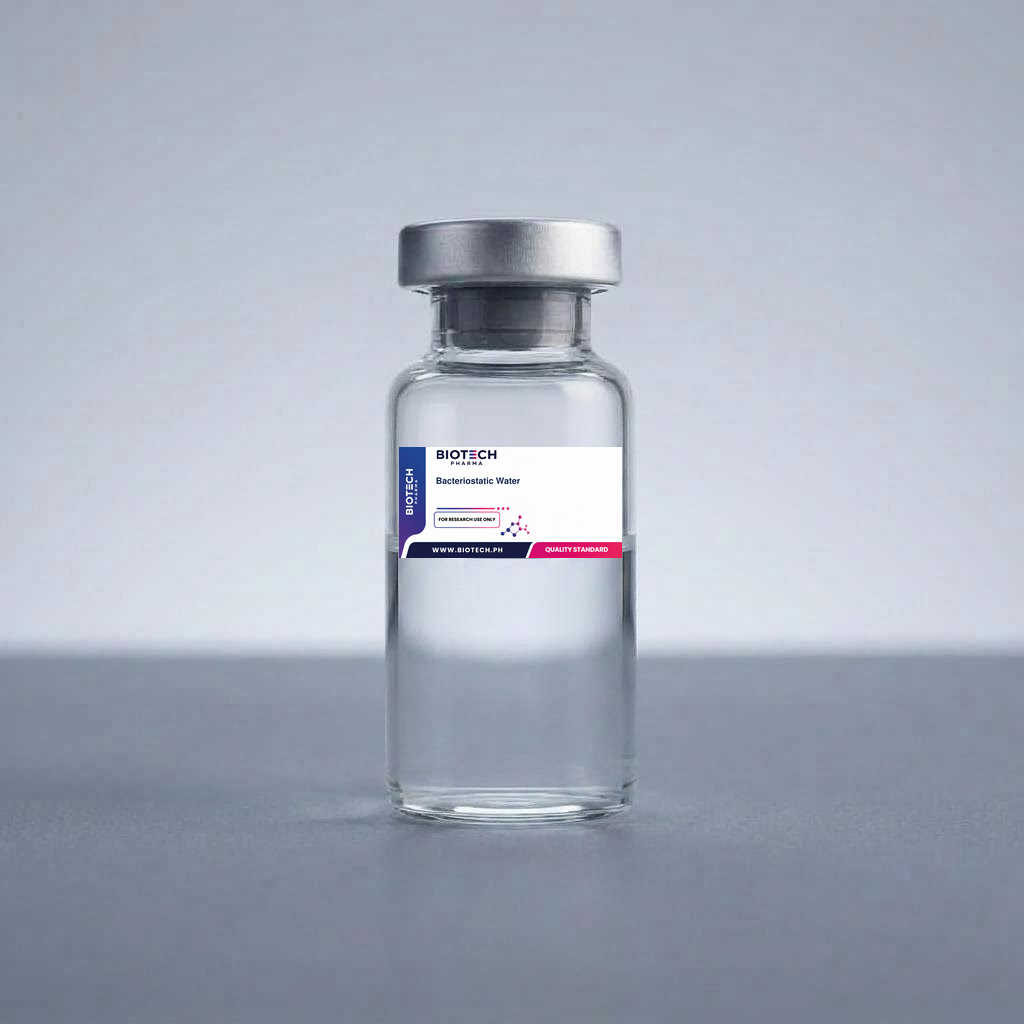
Bacteriostatic Water
Aqueous laboratory research reagent studied as a companion diluent for reconstituting lyophilized peptides in the laboratory.