
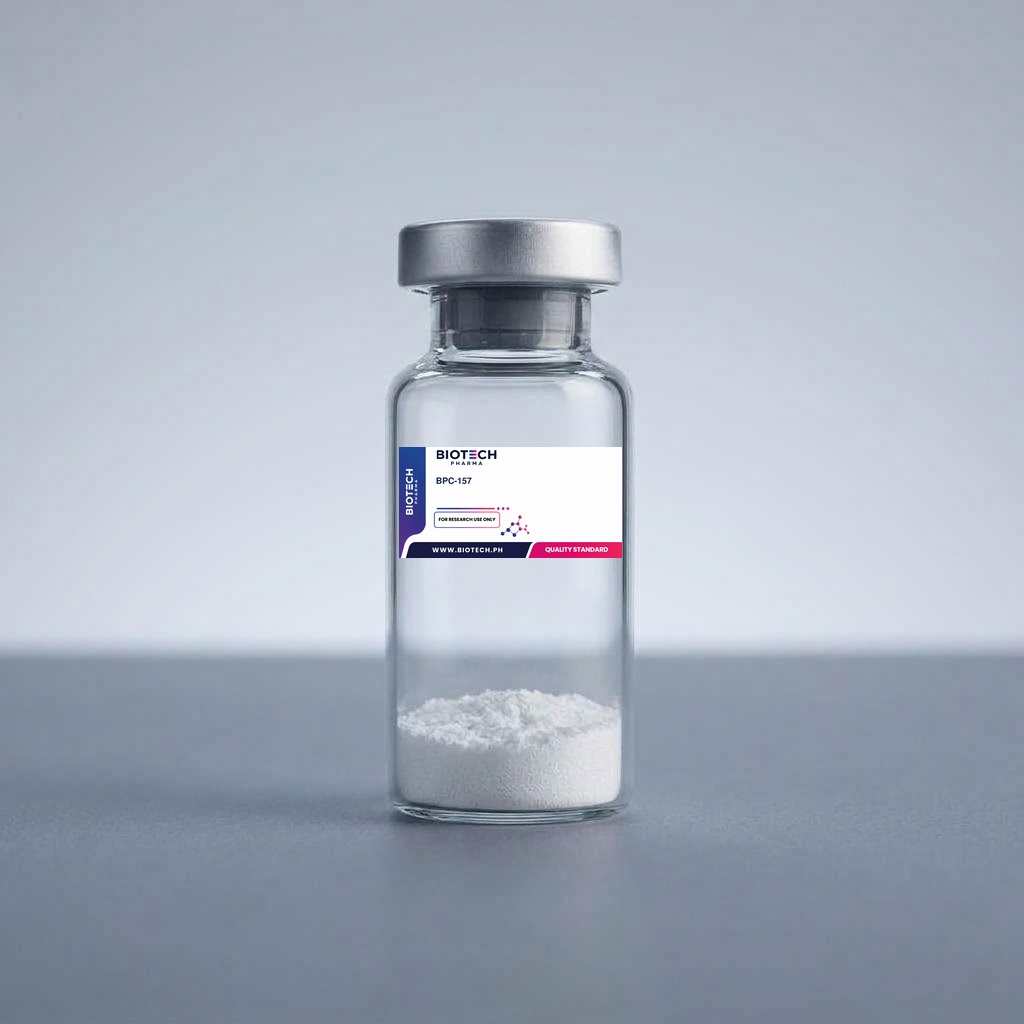
BPC-157
Also known as: Body Protection Compound 157, PL 14736
- CAS Number
- 137525-51-0
- Molecular Formula
- C62H98N16O22
- Molecular Weight
- 1419.5 g/mol (free peptide)
- Purity
- Batch-specific
- Form
- Lyophilized powder
- Enquiry Sizes
- 5 mg • 10 mg • Bulk (gram+)
- Peptide Sequence
- Gly-Glu-Pro-Pro-Pro-Gly-Lys-Pro-Ala-Asp-Asp-Ala-Gly-Leu-Val
Compliance Notice: All products supplied by BioTech Pharma are intended strictly for laboratory research and development use only. They are not intended for human or veterinary use, diagnosis, treatment, or consumption of any kind. By submitting an enquiry, the requester confirms they are a qualified researcher or institution and accepts full responsibility for compliant handling and use.
Configure Your Request
Documentation requests are reviewed against the records available for the applicable lot. Availability, methods, and values must be confirmed for the specific enquiry and are not promised in advance.
Form supplied: Lyophilized powder. Your selections are carried into the quote request automatically.
Overview
BPC-157 is a stable pentadecapeptide (15 amino acids) corresponding to a partial sequence of Body Protection Compound, a protein identified in human gastric juice. It is among the most cited peptides in experimental regenerative research, with preclinical studies spanning tendon, ligament, muscle, nerve, and gastrointestinal models.
Mechanistic research has studied its interactions with the nitric-oxide system, angiogenesis signaling (VEGF pathways), and fibroblast migration in laboratory models. These are preclinical and in-vitro observations that do not establish clinical efficacy.
BioTech Pharma supplies BPC-157 as a lyophilized acetate salt for laboratory research use only. Lot-specific analytical documentation may be available and should be confirmed for the applicable material. Its reported stability in aqueous environments makes it a practical compound for extended in-vitro protocols.
Research Applications
- Tendon and ligament repair models
- Gastrointestinal mucosal-integrity research
- Angiogenesis and VEGF-pathway studies
- Nitric-oxide system interactions
- Fibroblast migration and wound-model assays
Frequently Asked Questions
Scientific References
Analytical Data
Lot-specific documentation may be available for the applicable material and must be confirmed per enquiry. Where available, it may include:
- HPLC purity result
- LC-MS identity confirmation
- Appearance
- Net content
Request the records you need with your quote and we will confirm availability for your batch.
Procurement Details
Availability, lead time, salt / content basis, and cold-chain requirements depend on the specific lot and quantity, so we confirm them per enquiry rather than publishing fixed figures. Request confirmation for your requirements with your quote and our team will respond with details for the applicable batch.
Storage & Handling
Lyophilized: store at −20 °C, protected from light. Reconstituted: keep at 2–8 °C and determine working-solution stability empirically per lot, as reconstituted stability varies with diluent, concentration, and handling.
Related Compounds
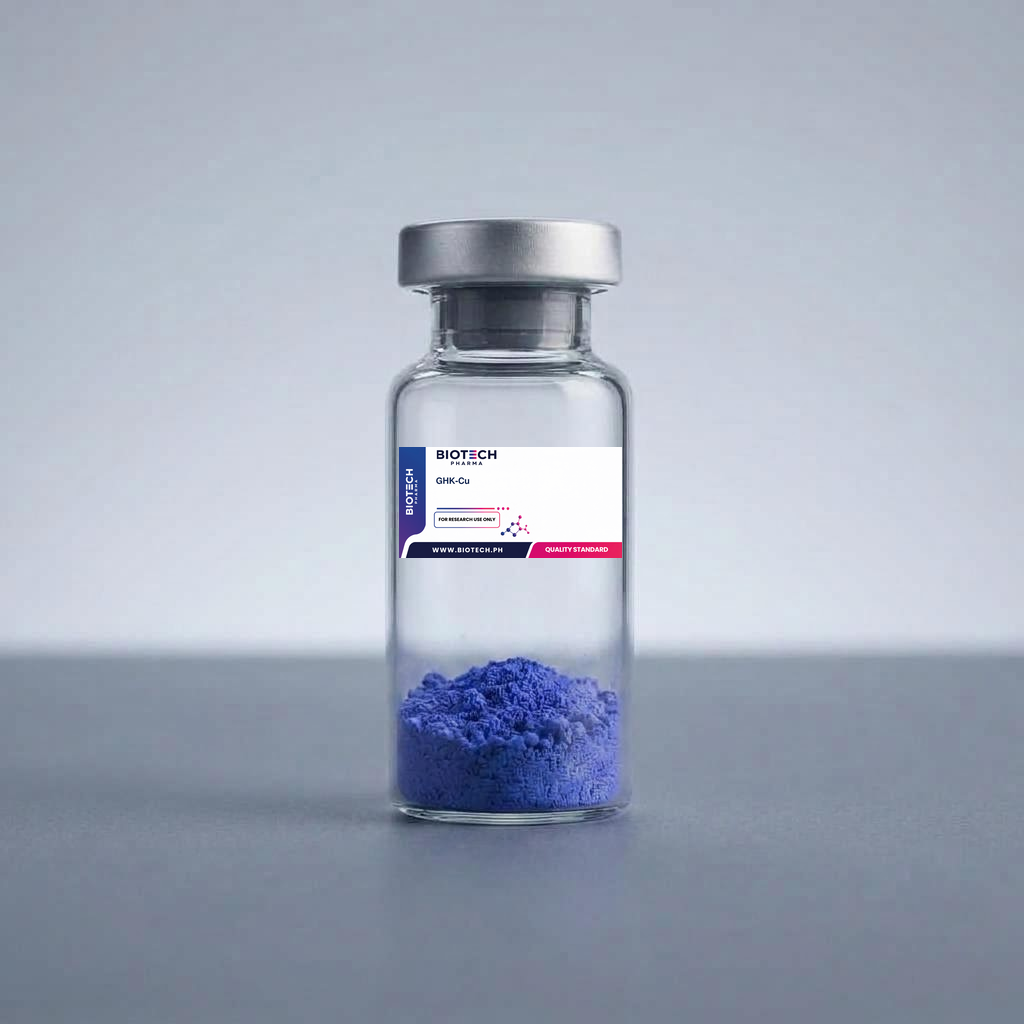
GHK-Cu
Naturally occurring copper tripeptide complex, central to dermal-matrix, collagen-synthesis, and cosmetic-formulation research.
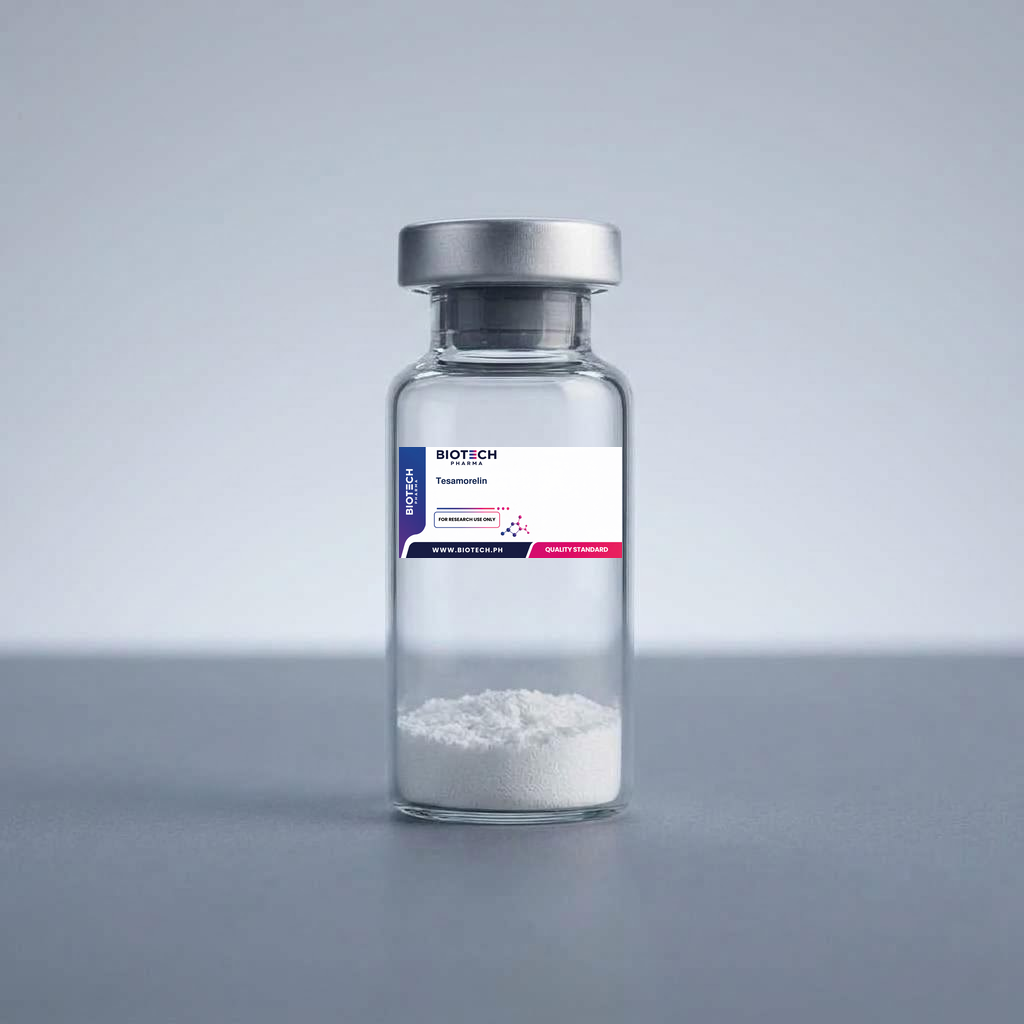
Tesamorelin
Stabilized GHRH analog used in growth-hormone-axis research, engineered for resistance to enzymatic degradation.
Bacteriostatic Water
Aqueous laboratory research reagent studied as a companion diluent for reconstituting lyophilized peptides in the laboratory.