
2D Molecular Structure
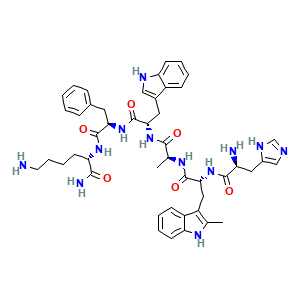
- CID
- 6918297
- Standard InChIKey
- RVWNMGKSNGWLOL-GIIHNPQRSA-N
- FDA UNII
- 09QF37C617
- Residue Count
- 6 AA
- Structural Modifications
- C-terminal amide (–NH2)
- No disulfide
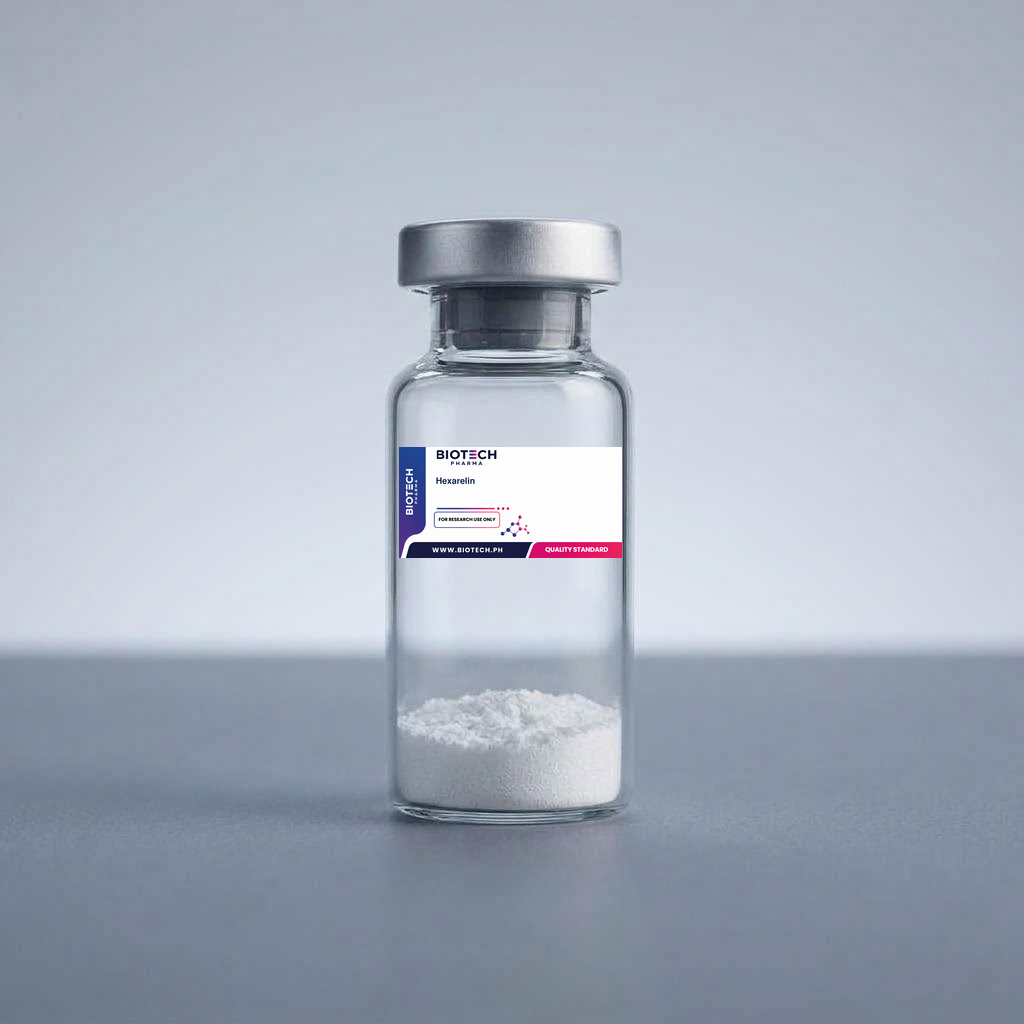
Hexarelin
Also known as: Examorelin, EP-23905
- CAS Number
- 140703-51-1
- Molecular Formula
- C47H58N12O6
- Molecular Weight
- 887.0 g/mol
- Purity
- Batch-specific
- Form
- Lyophilized powder
- Enquiry Sizes
- Research vial • Bulk / custom fill (quote required)
- Peptide Sequence6 residues
- His-D-2-methyl-Trp-Ala-Trp-D-Phe-Lys-NH2
Compliance Notice: All products supplied by BioTech Pharma are intended strictly for laboratory research and development use only. They are not intended for human or veterinary use, diagnosis, treatment, or consumption of any kind. By submitting an enquiry, the requester confirms they are a qualified researcher or institution and accepts full responsibility for compliant handling and use.
Configure Your Request
Documentation requests are reviewed against the records available for the applicable lot. Availability, methods, and values must be confirmed for the specific enquiry and are not promised in advance.
Form supplied: Lyophilized powder. Your selections are carried into the quote request automatically.
Overview
Hexarelin (examorelin) is a synthetic hexapeptide of the growth-hormone-releasing peptide (GHRP) family. Structurally it is closely related to GHRP-6, differing by substitution of the tryptophan residue with a 2-methyl-D-tryptophan, and it is amidated at the C-terminus. Its defined sequence and molecular formula (C47H58N12O6) make it a well-characterized reference peptide for growth-hormone-axis research.
In preclinical studies, hexarelin has been examined as an agonist of the growth-hormone secretagogue receptor (GHS-R1a, the ghrelin receptor) and has also been reported to interact with the scavenger receptor CD36 in cardiovascular tissue models. These are laboratory findings used to probe secretagogue signaling and receptor selectivity; they should be distinguished from any established clinical pharmacology.
BioTech Pharma supplies hexarelin as a lyophilized powder for in-vitro and preclinical research only; it is not a drug or a product for human or veterinary use. Lot-specific analytical documentation may be available and should be confirmed for the applicable material.
Research Applications
- GHS-R1a (ghrelin receptor) agonist pharmacology
- Growth-hormone secretagogue comparative studies
- Structure–activity relationships within the GHRP family
- CD36 receptor interaction models in cardiovascular tissue
- Peptide amidation and metabolic-stability chemistry
Frequently Asked Questions
Scientific References
Analytical Data
Lot-specific documentation may be available for the applicable material and must be confirmed per enquiry. Where available, it may include:
- HPLC purity result
- LC-MS identity confirmation
- Appearance
- Net content
Request the records you need with your quote and we will confirm availability for your batch.
Procurement Details
Availability, lead time, salt / content basis, and cold-chain requirements depend on the specific lot and quantity, so we confirm them per enquiry rather than publishing fixed figures. Request confirmation for your requirements with your quote and our team will respond with details for the applicable batch.
Storage & Handling
Lyophilized: store sealed at −20 °C, protected from light and moisture. Reconstituted solutions should be kept refrigerated (2–8 °C); prepared-solution stability is lot-specific and should be established empirically for each application. Prepared-solution stability should be confirmed for the applicable material.
Related Compounds
Ipamorelin
Selective pentapeptide ghrelin-receptor agonist prized in GH-axis research for its clean receptor-selectivity profile.
Sermorelin Acetate
Amidated GHRH(1-29) analog corresponding to the active N-terminal fragment of growth-hormone-releasing hormone, supplied as the acetate salt.
Tesamorelin
Stabilized GHRH analog used in growth-hormone-axis research, engineered for resistance to enzymatic degradation.